
Community and membership websites.
Custom-coded websites for clubs, classes, community groups, local hubs, directories and membership organisations. Built so the directory stays accurate, the What's On shows only what is still to come, and newcomers can see how to join. Your homepage preview is free, within 48 hours.
What this kind of site has to do.
Stay true after the launch party
A group's website is judged by its stalest detail. One practitioner who moved away, a venue that changed in spring or a session leader who left, and visitors start doubting every other line. Keeping it current has to be easy, because organisers rarely have spare evenings.
Serve two audiences at once
Members want dates, venues and changes. Newcomers want to know whether they would fit in. A hub also has a third audience: practitioners or organisations deciding whether to list with you. Each needs its own route through the site.
Make the first step small
Plenty of people curious about a class or club never turn up, often because walking into a room of strangers feels like a big ask. Saying who a session suits, what to bring and how to register interest turns a maybe into a name on a list, which is where membership actually starts.
A directory is only as useful as its least current entry
People use a local directory in a particular way. They arrive with a need, a stiff back, a teenager who wants to try yoga, a parent who cannot switch off at night, and scan for somebody nearby who helps with that. If the first listing they open has a dead link or a number that rings out, they stop trusting the page and go back to asking in a Facebook group.
So the decisions that matter are about upkeep rather than decoration. Who sends changes, and to whom? What must a listing contain so it is still accurate a year from now? On Wallingford Wellbeing each practitioner has a short description, what they offer and a direct link to their own website or booking page, grouped under headings such as Move & Flow, with an A to Z for visitors who already know a name. Grouping by need works better than grouping by job title, because most visitors do not know which therapy they are looking for until they read about it.
The other decision is how someone gets in. A plain "apply to join" page that sets out what a listing includes and who it is for saves the organiser answering the same question thirty times by message.
Events should leave the page when they are over
Few things make a group look abandoned faster than a What's On headed by a summer fete that happened two years ago. It usually happens because whoever added the event had no reason to go back and remove it. The fix is structural: every one-off event is entered with its date and falls off the listing once that date passes. Weekly and monthly sessions stay up for as long as they run.
Each entry should answer what people want settled before they commit: when, where, how much, who leads it and what to do next. Wallingford Wellbeing lists the venue, the price and the practitioner for each class, with a "register your interest" button while dates are still being confirmed. For a sports club the equivalent might be training nights, age groups and whether a first session costs anything.
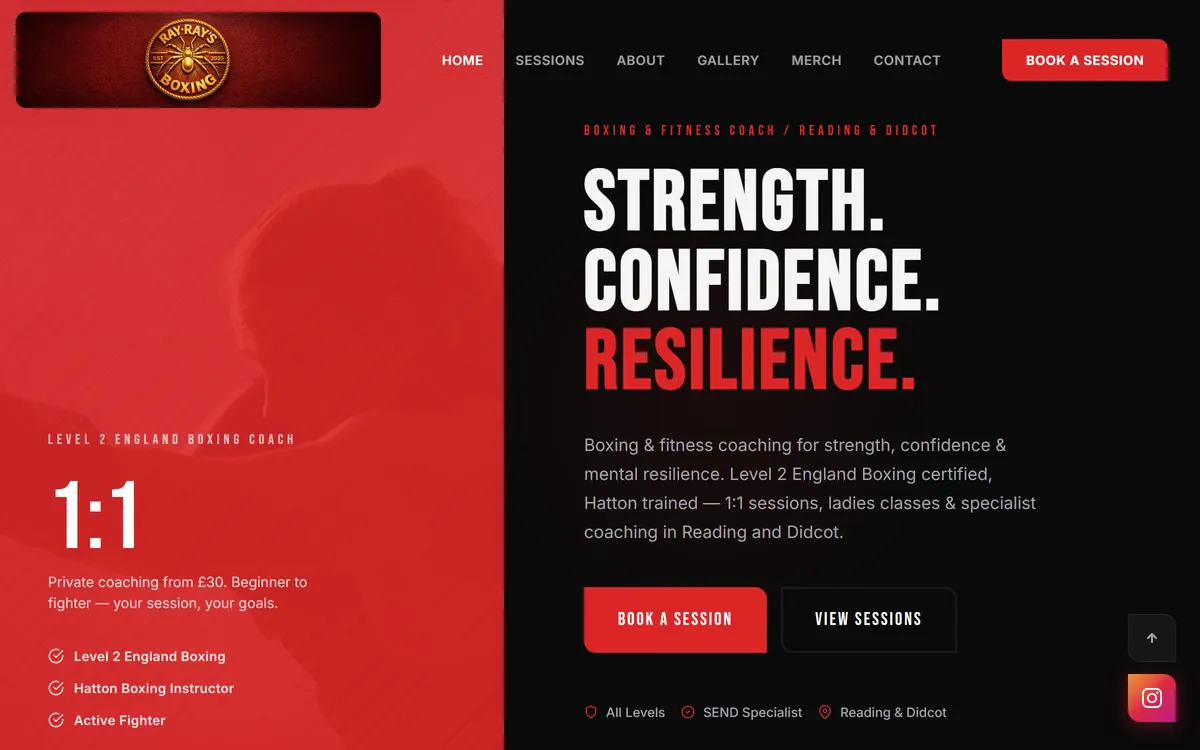
Then think about the person who has never been. A page describing what a first session feels like does more for numbers than another month of social posts. Ray Ray's Boxing says it plainly on its women's group: complete beginners welcome, all equipment provided.
What I build for you.
- A directory of practitioners, members or coaches, grouped by need, each linking to their own site.
- A dated What's On for classes, workshops and events, where one-off dates drop off once they have passed.
- A page per class or programme covering who it suits, price, venue and who leads it.
- A join or enquiry form for new members, plus an "apply to list" form if other people appear in your directory.
- Links to your community: newsletter sign-up, WhatsApp group, Facebook and Instagram.
- Video and maps that load on a click, so nothing sets tracking cookies before a visitor agrees.
- Local SEO and Google Business Profile setup, so people searching for a class near them find you.
- Updates by message: send me a change on WhatsApp or email and I make it, included in the monthly fee.
Where this stops. Member logins, members-only pages, profiles that members edit themselves, forums, and taking membership fees or subscriptions on the site are not part of the standard plans. Those are Custom, from £1,500, and I will say honestly if something simpler would do. A button to a payment link you already use is fine. If people need to book specific time slots, Booksmith, the booking system I build and run, covers that separately.
Groups and hubs already live.
Live sites for people running classes, programmes and a local network.


Two fixed tiers + Custom. Published, not hidden.
Most community sites fit Own Your Area (£500 + £60/mo): fifteen pages covers a directory, a What's On, programme pages and a join form, with copywriting and the 90-day page-one promise. A single class or small club with one timetable can start on Get Customers (£250 + £40/mo). Own Your Area is also available with £0 upfront at £110 a month for a 12-month minimum, dropping to £60 after that.
All tiers include coded build, free preview first, hosting, SSL, domain, unlimited updates, mobile-first design and lifetime price lock. See full tier comparison →
Straight answers for clubs and groups.
How much does a website for a club or community group cost?
Most community sites sit on Own Your Area at £500 plus £60 a month, which allows up to 15 pages for a directory, a What's On, programme pages and a join form. A single class or a small club with one timetable can start on Get Customers at £250 plus £40 a month. Either way, your homepage preview is free before you pay anything.
Can members log in to a private area?
Not as standard. Logins, members-only pages, profiles that members edit themselves and paid subscriptions are Custom work, from £1,500, quoted after we have talked through what you actually need. Plenty of groups find that public pages plus a WhatsApp community for members covers it without anyone needing a password.
Who keeps the directory and the timetable up to date?
I do, as part of the monthly fee. You send the change by email or WhatsApp, such as a new practitioner, a changed venue or a cancelled session, and I make it. Listings are built from one structured list, so a change made once shows everywhere that entry appears.
Do past events disappear on their own?
Yes, if you want them to. Each one-off event is entered with its date and drops off the listing once that date has passed, Weekly and monthly sessions stay up for as long as they run.
Can people pay for classes or membership through the site?
A button can send people to a payment page you already use, such as a Stripe or Square payment link, and that is included. Taking membership fees on the site itself, with renewals and records, is Custom. If people book specific time slots, Booksmith, the booking system I build and run, handles that separately.
See your group's website before you commit to it.
Tell me what you run and where, and I will design the homepage free. Show your committee first. If it is not right, you owe nothing.
Get my free preview Or WhatsApp James directly